
ELON MUSK: HOW A TEENAGE CODER BUILT THE WORLD'S FIRST TRILLION-DOLLAR FORTUNE
When Elon Musk sold the code for a simple video game called BLASTAR at the age of 12, the transaction was worth just $500. It was a modest achievement by any standard, and certainly not the kind of event that would make financial history. Yet more than four decades later, that same teenager would become the first person in history to surpass a net worth of $1 trillion, crossing a milestone that once seemed impossible even for the world's richest individuals. The journey from a small computer game to a trillion-dollar fortune is not merely a story about wealth, it is a story about vision, risk, and an extraordinary ability to build companies that reshape entire industries.
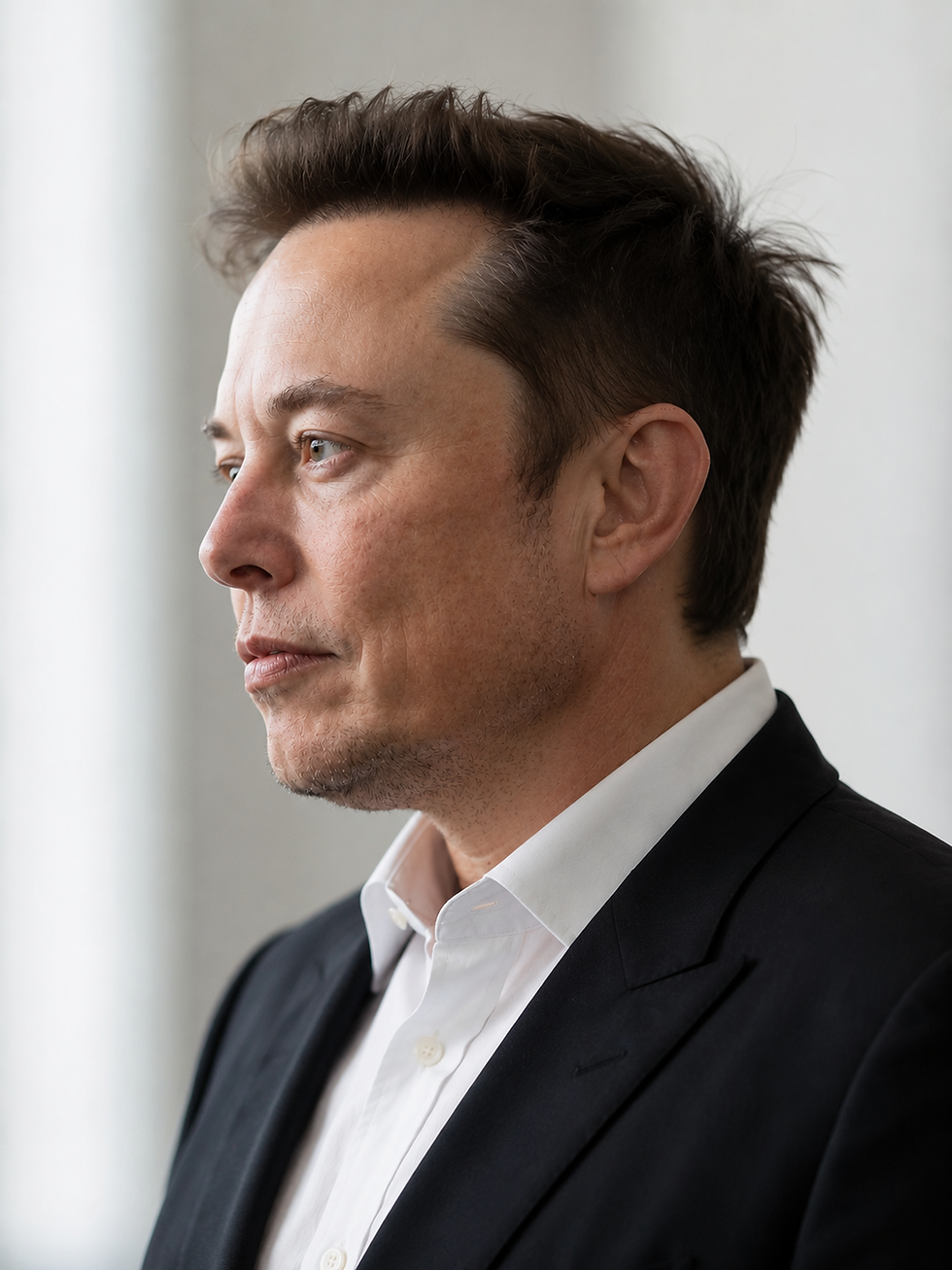
Musk's path to becoming the world's first trillionaire did not begin with Tesla or SpaceX. It began during the early days of the internet. After moving to North America and studying at the University of Pennsylvania, he co-founded Zip2, a software company that helped newspapers establish an online presence. In 1999, the company was acquired for approximately $307 million, providing Musk with his first significant financial success. Rather than protecting his newfound wealth, he immediately reinvested it into a new venture called X.com, an online financial services company that would later evolve into PayPal. When eBay acquired PayPal in 2002 for $1.5 billion, Musk walked away with more than $180 million. For most entrepreneurs, that level of success would have marked the end of the journey. For Musk, it was merely the beginning.

Instead of diversifying his fortune into safer investments, he concentrated nearly all of his capital into three highly ambitious projects: SpaceX, Tesla, and SolarCity. The decision was considered reckless. SpaceX faced repeated rocket failures. Tesla struggled with production delays and financial uncertainty. At one point, Musk was reportedly funding both companies while approaching personal bankruptcy. By 2008, both ventures were on the verge of collapse. Yet that same year would prove to be a turning point. NASA awarded SpaceX a major contract, while Tesla secured crucial financing that allowed the company to survive. Over the following decade, Musk transformed two industries that many believed were impossible to disrupt. Tesla accelerated the global transition toward electric vehicles and became one of the most valuable automotive companies in history. SpaceX achieved what governments and aerospace giants had failed to accomplish for decades: reusable rockets. By dramatically reducing the cost of launching payloads into orbit, SpaceX fundamentally changed the economics of space exploration. The company went on to dominate commercial launches, build the world's largest satellite internet network through Starlink, and become a central player in the future of space transportation.

What separates Musk from many successful founders is that his wealth was not created by a single company. It was built through a portfolio of interconnected businesses operating at the frontier of technology. Tesla became the global symbol of electric mobility. SpaceX redefined aerospace. Neuralink pushed the boundaries of brain-computer interfaces. The Boring Company explored new approaches to urban transportation. X evolved beyond social media ambitions, while xAI emerged as Musk's answer to the rapidly accelerating artificial intelligence race. By 2026, the company at the center of his fortune was no longer Tesla, it was SpaceX. After years as the world's most valuable private company, SpaceX completed a historic public offering that became the largest IPO ever recorded. Investors poured into the stock, pushing the company's valuation above $2 trillion within days of its market debut. Because Musk retained a massive ownership stake, the listing instantly added hundreds of billions of dollars to his personal wealth and propelled him beyond the trillion-dollar threshold. Reports following the IPO estimated his net worth at more than $1.1 trillion, making him the first member of what many analysts called the "four-comma club." Yet focusing solely on the number misses the deeper significance of the achievement. Musk's fortune represents one of the largest examples of value creation in modern history. Unlike fortunes built primarily through inheritance, natural resources, or financial engineering, Musk's wealth emerged from ownership in companies that developed new technologies and created entirely new markets. SpaceX transformed commercial spaceflight. Tesla forced the automotive industry into the electric era. Starlink connected regions previously beyond the reach of traditional internet infrastructure. Whether one agrees with Musk's methods or not, the economic impact of these companies is undeniable. His rise has also sparked intense debate. Supporters view him as one of the greatest innovators of the modern era, comparing his influence to industrial pioneers such as Thomas Edison, Henry Ford, and Steve Jobs. Critics argue that the scale of his wealth highlights growing inequality and raises important questions about the concentration of economic power. Regardless of perspective, both sides agree on one point: Musk has become one of the most influential business figures of the 21st century. The most remarkable aspect of Elon Musk's trillion-dollar story is that it was never built overnight. It was the result of decades of relentless execution, repeated failures, and a willingness to pursue ideas that most investors considered unrealistic. From teaching himself programming as a child in South Africa to leading companies that shape transportation, energy, artificial intelligence, and space exploration, Musk consistently bet on the future long before the rest of the world could see it.
The distance between a $500 video game and a $1 trillion fortune is almost impossible to comprehend. Yet Elon Musk's story demonstrates that extraordinary wealth is rarely created by chasing money itself. It is created by solving problems at a scale so large that entire industries are forced to change. In doing so, Musk did not simply become the world's richest person. He became the first trillionaire in history.


Comments